Designing a multi-species freshwater aquarium requires navigating complex behavioral traits, territorial instincts, and dietary differences. While beginner tanks often focus on safe, passive species, advanced hobbyists frequently explore more dynamic stocking strategies that combine active mid-water swimmers, specialized bottom dwellers, and territorial cichlids. Understanding how fish partition space and assert dominance is critical to preventing aggression and maintaining long-term tank harmony. In this advanced compatibility guide, we analyze stocking strategies for complex freshwater community systems.
COMPATIBILITY · GUIDE 07
Advanced Fish Compatibility: Matching Cichlids, Community Schools, and Bottom Dwellers
An expert compatibility analysis for freshwater aquariums, focusing on territorial boundaries, aggressive cichlid stocking, and harmonious multi-species community design.
Reference source →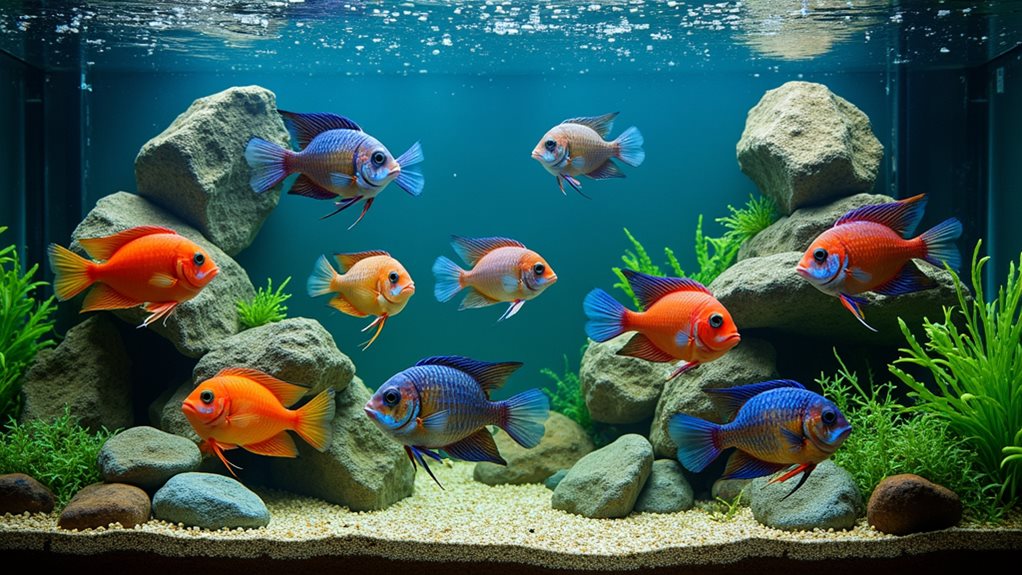
Related guides
Compatibility
The Ultimate Freshwater Compatibility Matrix: Peaceful Community Stocking Rules and Aggression Avoidance
Compatibility
Advanced Fish Compatibility: Managing Cichlid Aggression, Invertebrate Safety, and Community Balance
Compatibility