Advanced fish compatibility is often tested most severely when cichlids, invertebrates, and community fish share the same water. Cichlids are intelligent, territorial, and opportunistic, while invertebrates such as shrimp and snails are slow, soft-bodied, and defenseless. Balancing these groups demands a clear-eyed understanding of aggression, predation, and the subtle ways water chemistry influences behavior. This guide examines how to manage cichlid aggression, keep invertebrates safe, and maintain the overall balance of a mixed community without sacrificing the character that makes cichlids so rewarding.
1. Reading Cichlid Aggression
Not all cichlid aggression is equal, and distinguishing its types is the first step toward managing it.
- Territorial Aggression: Directed at intruders near a chosen site, it is predictable and manageable with structure.
- Dominance Aggression: Aimed at establishing a hierarchy, it is often temporary but intense at the outset.
- Predatory Aggression: Driven by hunger and opportunity, it is the greatest threat to small fish and invertebrates.
2. Invertebrate Safety Fundamentals
Shrimp and snails are on the menu for most cichlids, so protection requires both species selection and structure.
- Species Selection: Amphipods, larger shrimp such as Amano shrimp, and robust snails survive better than small, soft species.
- Refuge Strategy: Dense moss, rock piles, and tight crevices give invertebrates places to retreat.
- Population Buffer: Start with a large breeding population so losses are absorbed by reproduction.
3. Compatible Cichlid Choices
Choosing mild-mannered cichlids is the single most effective way to protect a mixed community.
- Best Candidates: Dwarf cichlids such as Apistogramma and Mikrogeophagus are the safest community choices.
- Conditional Candidates: Angelfish work with shrimp and snails only if the invertebrates are large and the angelfish well fed.
- Avoid: Large, predatory, or highly territorial cichlids should be kept in species tanks.
4. Water Chemistry and Behavior
Water parameters shape cichlid temperament more than many keepers realize.
- Stability Over Perfection: Sudden shifts in pH or temperature trigger aggression and stress-related disease.
- Soft vs. Hard: Match water chemistry to species origin to reduce baseline stress and unpredictable behavior.
- Temperature: Warmer water increases metabolism and, with it, both appetite and aggression.
5. Structuring a Mixed Community
Physical layout is a powerful tool for compatibility and should be planned before stocking.
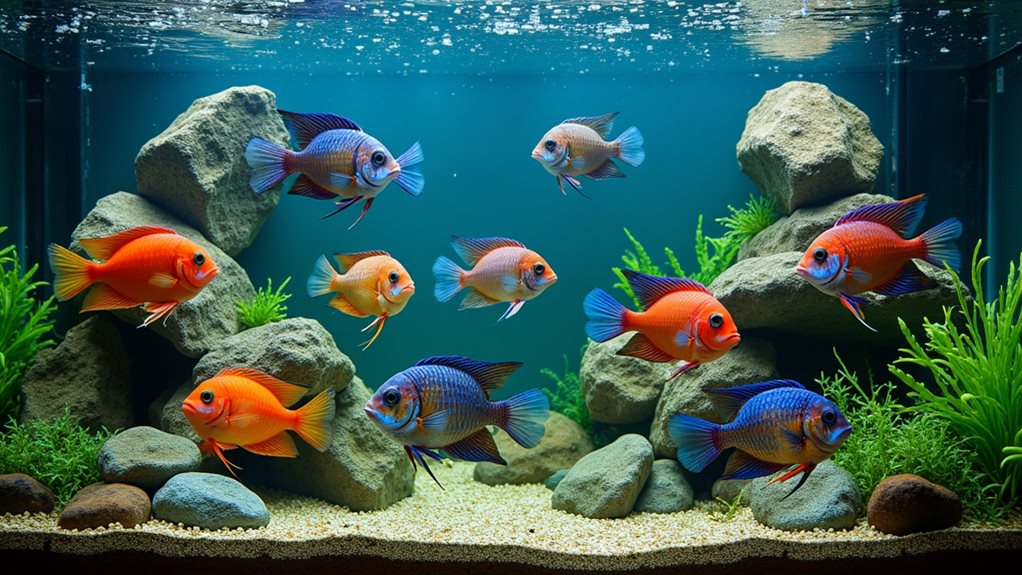
- Zones: Create distinct rocky, planted, and open areas so cichlids can claim territories without conflict.
- Sightline Breaks: Use driftwood and tall plants to interrupt the line of sight that fuels chasing.
- Feeding Stations: Spread food across multiple locations so timid fish and invertebrates get their share.
6. Stocking Ratios and Sequencing
Timing and ratios determine whether a mixed community stabilizes or deteriorates.
- Introduce Invertebrates First: Let shrimp and snails establish breeding populations before adding cichlids.
- Cichlid Ratios: One male with multiple females reduces harassment and spreads aggression.
- Quarantine All: Every arrival, including invertebrates, should be quarantined to protect the community.
7. When Balance Breaks Down
Even careful planning sometimes fails, and a prompt response limits damage.
- Detect Early: Look for missing shrimp, damaged fins, and frantic hiding before problems escalate.
- Adjust and Rescape: Move decor, add territories, and reduce stocking density to lower tension.
- Separate Decisively: A persistently predatory cichlid must be removed from the community rather than tolerated.