The single most effective disease-prevention tool in the aquarium hobby is not a medication; it is a quarantine tank. Every new arrival — fish, plant, or invertebrate — is a potential carrier of parasites, bacteria, or viruses that may devastate an established display. A dedicated quarantine and hospital tank isolates newcomers for observation and treatment, and its importance cannot be overstated. Yet many aquarists skip quarantine because it seems like extra work, only to pay for that shortcut with losses. This guide explains how to set up and run a quarantine and hospital tank that protects your display.
1. Why Quarantine Matters
Quarantine breaks the most common chain of disease introduction.
- Preventing Entry: New arrivals are the leading source of disease outbreaks.
- Observation Period: Two to four weeks allows latent problems to surface before exposure.
- Treatment Headroom: A hospital tank lets you medicate without harming the display.
2. Essential Equipment
A quarantine tank can be simple and inexpensive.
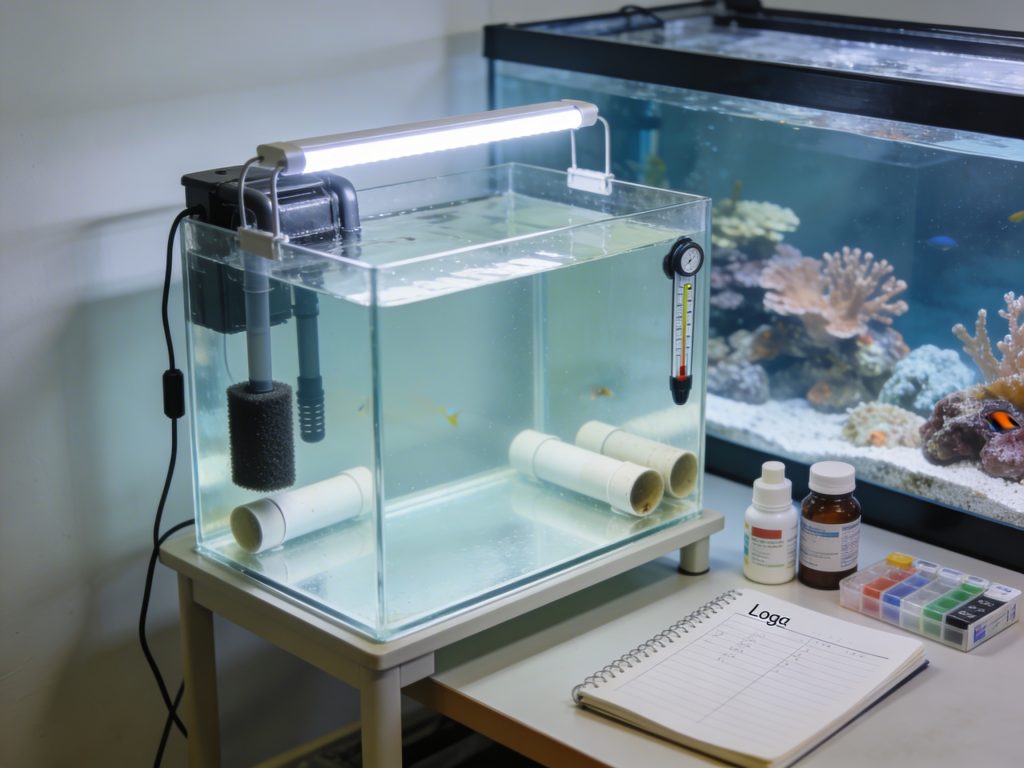
- Bare-Bottom Tank: Easy to clean and observe.
- Sponge Filter: Gentle biological filtration that runs on an air pump.
- Heater and Thermometer: Maintains stable temperature.
- Hiding Places: A few caves or PVC pipes reduce stress without complicating cleaning.
3. Water and Biological Readiness
Quarantine tanks must be fully cycled before use or handled carefully.
- Cycled Media: Seed the sponge filter with beneficial bacteria from an established tank.
- Water Changes: Keep ammonia and nitrite at zero with frequent partial changes.
- Stable Temperature: Match the display or treatment target temperature.
4. Quarantine Protocols
A structured protocol maximizes the value of quarantine.
- Observation Only: Observe new fish for two weeks without treatment unless symptoms appear.
- Prophylactic Treatments: Some aquarists treat for common parasites and worms routinely.
- Feeding: Feed lightly during quarantine to maintain water quality.
5. Hospital Tank Use
When disease strikes, the hospital tank becomes a treatment environment.
- Early Isolation: Move sick fish promptly to avoid contaminating others.
- Medication Accuracy: Follow dosage instructions precisely and monitor the fish closely.
- Water Quality: Many medications stress biological filtration; compensate with water changes.
6. Hygiene and Cross-Contamination
Disease can spread via equipment, so hygiene is critical.
- Dedicated Equipment: Use separate nets and tools for quarantine tanks.
- Disinfection: Clean and disinfect equipment between uses.
- Choice of Location: Keep quarantine tanks away from cross-contamination pathways.
7. Building Quarantine Into Routine
Quarantine should be a habit, not an emergency measure.
- Always Quarantine: quarantine every arrival, even from trusted sources.
- Keep It Running: A continuously running quarantine tank is always available.
- Record Observations: Track behavior and symptoms to inform treatment decisions.