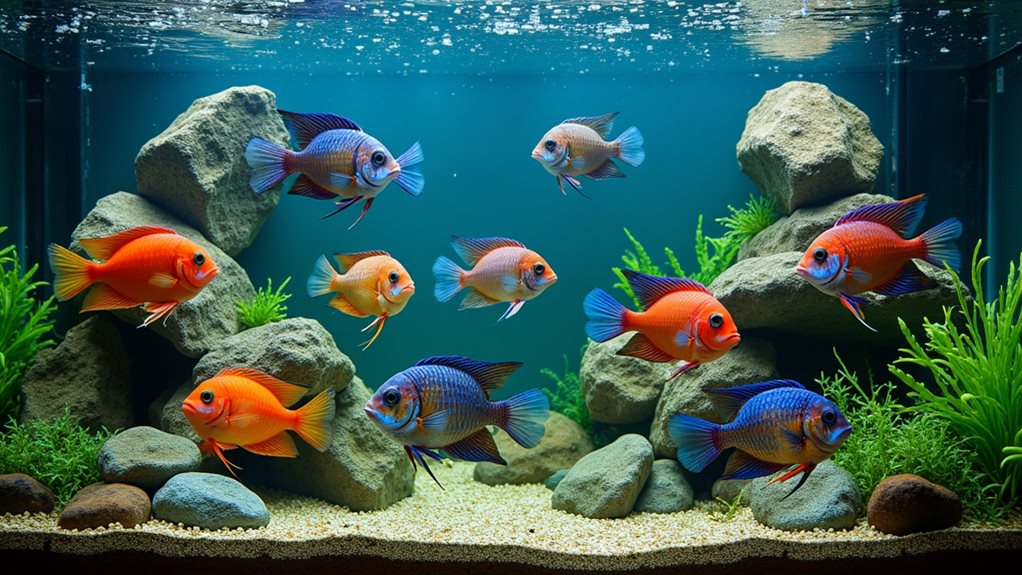
Rainbowfish are among the most rewarding groups in the freshwater hobby, offering shimmering iridescence, active schooling behavior, and a hardiness that suits both beginners and experts. Native to the rivers of Australia, New Guinea, and Madagascar, most rainbows are peaceful but energetic, requiring both space for swimming and tank mates capable of matching their pace. Because many species also grow larger than the average community fish, stocking a rainbowfish community demands attention to size, water parameters, and the number of individuals per school. This guide explains how to build a balanced, active community centered on rainbowfish.
1. The Nature of Rainbowfish
Understanding rainbowfish biology clarifies their compatibility requirements.
- Active Schooling: Most rainbows swim in the upper and mid water column in loose but constant shoals.
- Invertebrate Feeders: In the wild they graze on insects and small invertebrates, giving them a busy, foraging temperament.
- Growth and Lifespan: Many species grow large and live for years, so long-term planning matters.
2. Water Parameters
Rainbowfish generally prefer slightly alkaline, moderate-hardness water.
- pH and Hardness: Aim for 7.0 to 8.0 pH and moderate hardness for most species.
- Temperature: Maintain 22°C to 28°C depending on species, with stable conditions.
- Water Quality: They are fairly hardy but still benefit from regular water changes and strong filtration.
3. Matching Size and Pace
Compatibility with rainbowfish is largely a matter of size and energy.
- Similar Pace: Choose tank mates that share their active swimming style.
- Adequate Size: Avoid fish small enough to be seen as prey by larger rainbow species.
- School Numbers: Keep each rainbow species in a group of six or more to satisfy their social needs.
4. Ideal Tank Mates
A range of fish complements rainbowfish well.
- Other Rainbows: Combining several rainbow species creates a stunning, active display.
- Robust Barbs and Danios: Species of similar size and temperament coexist easily.
- Bottom Dwellers: Corydoras and larger loaches occupy the substrate without conflict.
- Plecos: Provide algae control and bottom-layer interest.
5. Tank Mates to Avoid
Some species clash with rainbowfish behavior or size.
- Slow, Delicate Fish: Bets and long-finned species are stressed by constant activity.
- Very Small Fish: They may be predated by larger rainbows.
- Aggressive Cichlids: Highly territorial species will disrupt the peace.
6. Tank Setup and Aquascaping
Rainbowfish appreciate a long swimming space with open water.
- Long Tanks: Provide horizontal swimming room rather than a tall, narrow footprint.
- Planting: Use plants at the ends and back to leave open swimming space.
- Lighting: Bright, naturalistic lighting shows off their iridescence best.
7. Managing a Rainbowfish Community
Ongoing care keeps active communities stable.
- Quarantine New Fish: Always quarantine to protect the group from disease.
- Feed Varied Food: Offer a diet that supports color and condition.
- Watch for Stress: Look for fin clamping, hiding, or lost iridescence as early warning signs.