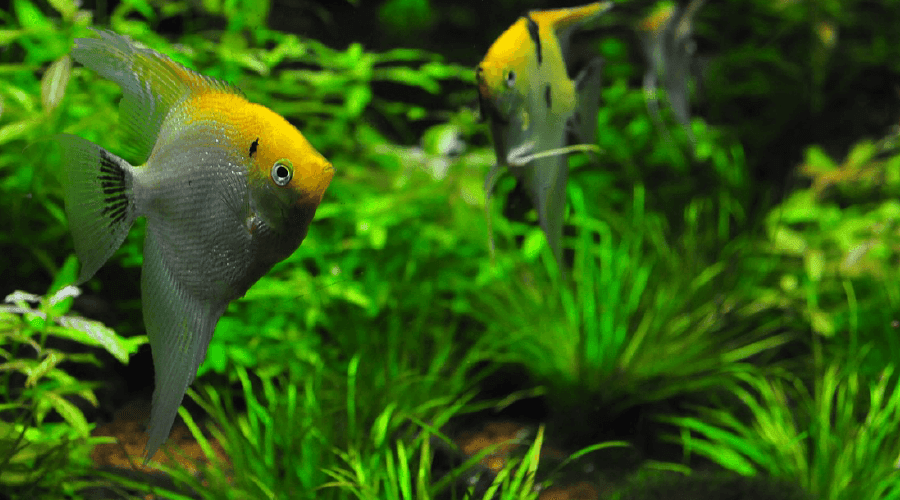
Angelfish are among the most beautiful freshwater fish, but their graceful appearance disguises a true cichlid instinct to grow large, pair off, and consume anything that fits in their surprisingly expandable mouths. Building a community around angelfish therefore requires careful thought about predation, fin-nipping risks, and the fact that a peaceful juvenile often becomes a territorial adult. This guide examines how to manage angelfish predation, protect vulnerable tank mates, and stock a community that remains harmonious as the angelfish matures and pairs.
1. The Predation Reality
The most important compatibility fact about angelfish is also the least sentimental: they eat smaller fish.
- Mouth Size: Angelfish can swallow fish nearly the size of their own body depth, including neon tetras.
- Growth Factor: Juveniles are harmless; adults are patient, effective predators, especially at night.
- Rule of Thumb: Never house angelfish with fish smaller than a cardinal tetra as adults.
2. Suitable Tank Mates
Choosing fish that are both large enough to avoid predation and calm enough to coexist is the key to success.
- Robust Tetras: Larger species such as black skirt or bleeding heart tetras make ideal companions.
- Bottom Dwellers: Corydoras, larger loaches, and plecos occupy a separate niche and grow large enough to be safe.
- Peaceful Mid-Sized Fish: Rasboras of adequate size and study catfish can round out the community.
3. Managing Aggression and Pairing
Angelfish aggression is largely driven by pairing and territory, and it must be anticipated rather than discovered.
- Pairing Behavior: Once a pair forms, they defend a territory and may harass other angelfish relentlessly.
- Territory Space: Provide a large footprint and visible structure so pairs can claim space without conflict.
- Group Versus Pair: Groups work while young; established pairs often need their own tank or rehoming of extras.
4. Fin-Nipping Vulnerabilities
Angelfish's long, trailing fins make them targets, despite their size.
- Nippers to Avoid: Tiger barbs and other known fin-nippers will shred angelfish fins.
- Tank Mate Selection: Choose species known for calm, non-nipping temperaments.
- Monitoring: Inspect fin edges weekly; persistent fraying requires separating the nipper.
5. Water Parameters and Compatibility
Angelfish prefer warm, soft to moderately hard water, which naturally narrows the list of suitable tank mates.
- Temperature: Keep 24°C to 28°C, which suits many South American species.
- Soft Water: Soft, slightly acidic water pairs well with tetra and cory communities.
- Avoid Conflicts: Hard-water livebearers and soft-water blackwater species should not be mixed with angelfish.
6. Stocking Strategy and Sequencing
How angelfish are introduced shapes the long-term peace of the tank.
- Introduce Last: Add angelfish after peaceful schools have settled so it does not claim the entire tank.
- Number Control: Keep a small group or a single pair; larger groups almost always produce extra pairs and conflict.
- Quarantine: Angelfish frequently carry parasites; quarantine all new stock for two to three weeks.
7. Troubleshooting an Angelfish Community
When predation or aggression appears, rapid intervention protects the community.
- Remove Prey: Immediately relocate fish small enough to be eaten.
- Separate Pairs: Move paired angelfish if they terrorize tank mates.
- Rehome as Needed: A mature, predatory angelfish may simply be incompatible with a community and belongs in a species tank.