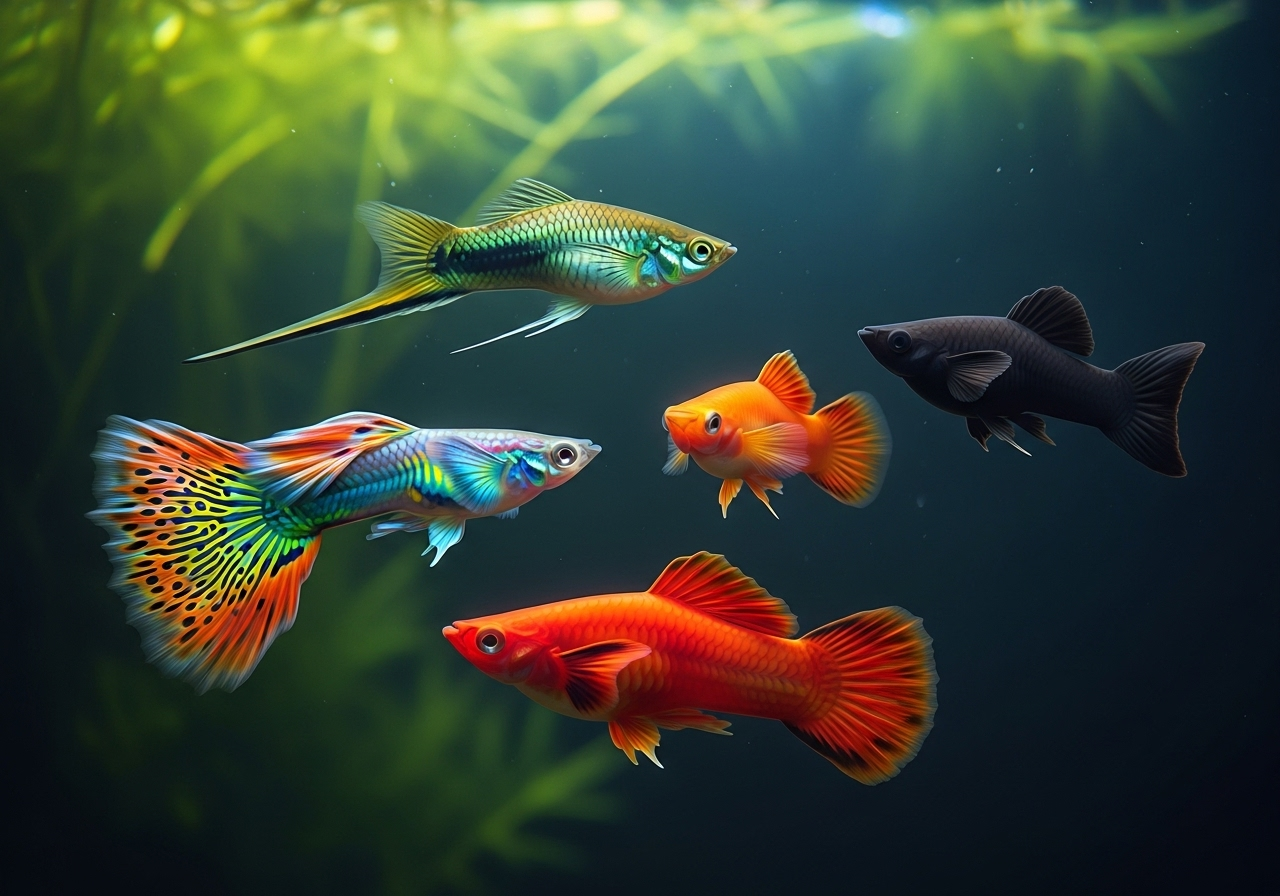
Livebearers such as guppies, mollies, platies, and swordtails are the backbone of the peaceful community aquarium, celebrated for their color, hardiness, and constant reproduction. Yet the same traits that make them appealing also create compatibility challenges: their rapid breeding can overcrowd a tank, their flowing tails attract fin-nippers, and their constant fry production can overwhelm filtration. Balancing livebearers with fin-nippers and peaceful community fish requires attention to sex ratios, water hardness, and the stocking math that keeps populations in check. This guide explains how to build a thriving livebearer community that stays healthy rather than chaotic.
1. The Livebearer Advantage and Burden
Livebearers are easy to keep, but their reproductive vigor is both their greatest asset and their biggest liability.
- Constant Breeding: Females store sperm and produce broods every few weeks, rapidly increasing population.
- Hardy Nature: They tolerate a wide range of conditions, making them forgiving for beginners.
- Overcrowding Risk: Without management, a small trio can become dozens within months.
2. Water Chemistry for Livebearers
Livebearers evolved in hard, mineral-rich waters and thrive when those conditions are reproduced.
- pH and Hardness: Neutral to alkaline water, 7.0 to 8.2 pH, with moderate to hard general hardness.
- Mineral Benefits: Dissolved calcium and magnesium support strong bones and full fin development.
- Matching Tank Mates: Choose species that also prefer harder water rather than soft-water blackwater fish.
3. Sex Ratios and Population Control
Sex ratio is the single most effective tool for managing a livebearer community.
- Female Bias: Keep two to three females per male to reduce harassment and stress.
- Sexing: Identify males by the modified anal fin (gonopodium) and by their slimmer, more colorful appearance.
- Culling and Rehoming: Regularly remove excess fry or find homes for them to prevent overcrowding.
4. Fin-Nippers and Peaceful Companions
Livebearers coexist best with fish that respect their flowing tails.
- Safe Companions: Corydoras, Otocinclus, snails, and other peaceful hard-water fish.
- Avoid: Tiger barbs, some danios, and other known nippers that will shred fins.
- Robust Nippers: If nippers are desired, keep them in a large enough school to distract one another.
5. Compatible Community Combinations
Proven combinations produce lively, low-conflict tanks.
- Classic Community: Guppies or platies with Corydoras and a small mid-water school of compatible rasboras.
- Hard-Water Community: Mollies and swordtails with splash tetras and a robust bottom layer.
- Species Focus: A dedicated livebearer tank allows selective breeding and full appreciation of color strains.
6. Stocking and Filtration Considerations
Livebearers breed quickly, so plan the bioload for future population growth, not just today's count.
- Filtration Headroom: Size filtration for the eventual population, not the initial stocking.
- Water Changes: Increase frequency as population grows to control nitrate.
- Plant Cover: Use dense plants to shelter fry and absorb nutrients they produce.
7. Managing Aggression and Overcrowding
Even peaceful livebearers can wear each other down when overcrowded.
- Identify Stressors: Watch for clamped fins, hiding, and reduced activity.
- Thin the Population: Rehome excess fish, especially surplus males, to restore calm.
- Re-scape: Adding cover and territories helps reduce competition and stress.