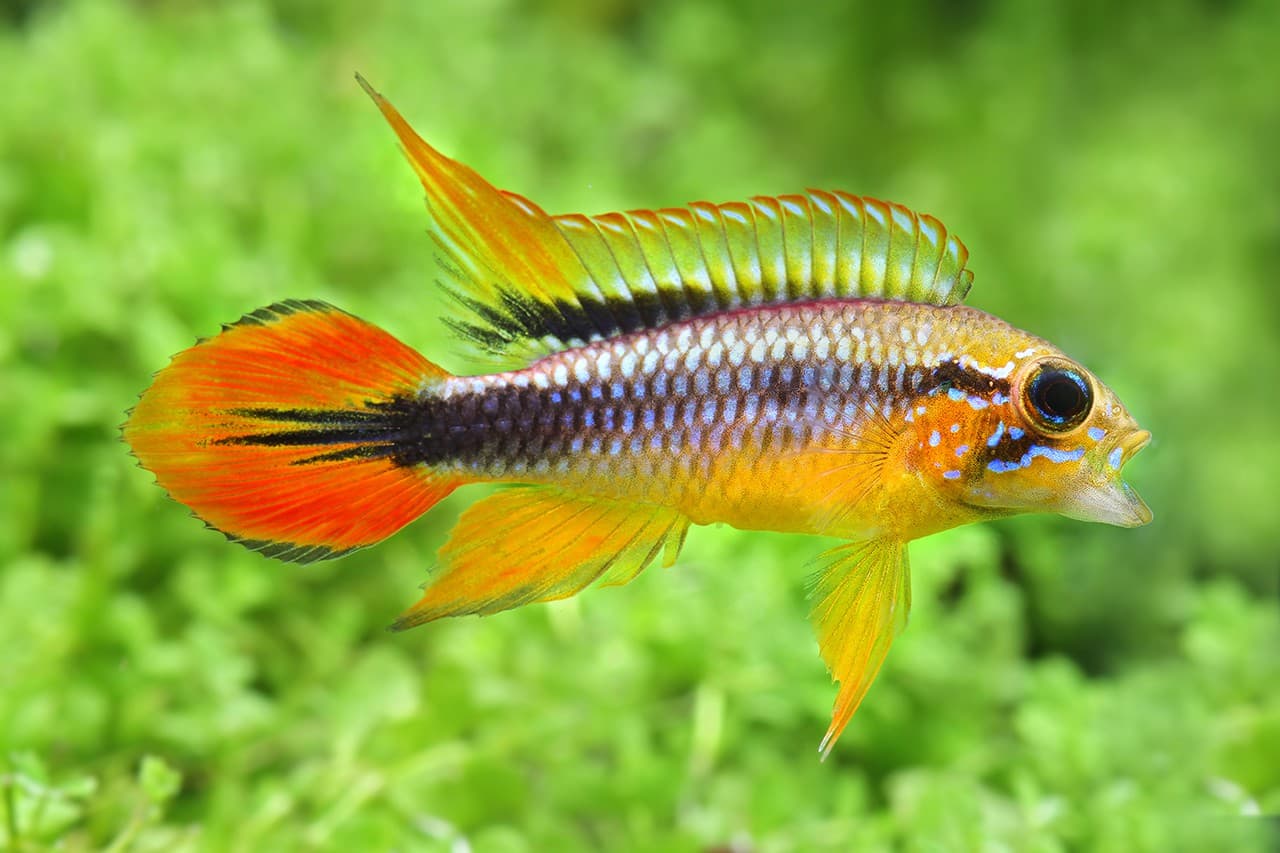
The German Blue Ram (Mikrogeophagus ramirezi) is one of the most stunning dwarf cichlids available, a small, peaceable fish whose electric blue spangles, golden flanks, and vivid red eyes make it a centerpiece of the planted community tank. Despite its beauty, the blue ram has a reputation for being delicate, and that reputation is only partly deserved. Wild and poorly bred specimens are genuinely sensitive, but well-bred fish kept in warm, soft, stable water are hardy and long-lived. This guide explains how to provide the parameters, aquascaping, and diet that keep German Blue Rams healthy, colorful, and ready to breed.
1. Natural Habitat and Water Parameters
Mikrogeophagus ramirezi originates from the warm, soft, acidic waters of the Orinoco basin in Venezuela and Colombia.
- Temperature Range: Maintain 26°C to 30°C (79°F to 86°F). These are among the warmest tropical fish commonly kept and do poorly below 26°C.
- pH and Hardness: Aim for 5.0 to 6.5 pH and very soft water. Hard, alkaline water shortens their lives.
- Water Quality: Rams demand pristine, low-nitrate water. They are sensitive to dissolved organics and unstable parameters.
2. Tank Setup and Aquascaping
A ram tank should be warm, soft, planted, and rich in structure.
- Minimum Tank Volume: Provide at least 75 liters (20 gallons) for a pair; larger tanks buffer parameter swings.
- Substrate and Decor: Use soft sand for sifting, plus driftwood, caves, and flat stones for spawning.
- Plants and Light: Combine shaded plant cover with open sandy feeding areas; subdued lighting suits their temperament.
3. Diet and Feeding Regimen
Rams are micropredators that graze the substrate for tiny invertebrates and should be fed accordingly.
- Staple Foods: High-quality micro-granules or slow-sinking pellets.
- Live and Frozen Foods: Bloodworms, brine shrimp, and blackworms are essential for condition and spawning.
- Feeding Frequency: Feed two to three small meals daily; rams have small stomachs and appreciate frequency.
4. Temperament, Pairing, and Tank Mates
Rams are peaceful for cichlids but form pairs and defend breeding territories vigorously.
- Pairing: Rams form pairs, and a compatible pair is affectionate and cooperative during spawning.
- Ideal Tank Mates: Peaceful mid-water fish such as small tetras and rasboras, plus calm bottom dwellers.
- Tank Mate Warnings: Avoid aggressive cichlids and any fish that competes for substrate territory.
5. Breeding and Fry Rearing
Breeding German Blue Rams is achievable in a dedicated, warm, soft-water setup.
- Spawning Sites: Provide flat stones and depressions where the pair cleans and lays eggs.
- Parental Care: Both parents fan and guard the eggs and lead free-swimming fry.
- Fry Feeding: Feed fry infusoria and microworms, then baby brine shrimp as they grow; keep the water warm and clean.
6. Common Health Issues and Prevention
Rams are more sensitive than many community fish, and prevention centers on stable water and heat.
- Ich and Velvet: Cool temperatures and stress invite parasites; maintain warmth and quarantine new arrivals.
- Internal Parasites: Rams frequently carry intestinal worms; deworm new stock during quarantine.
- Fin and Body Rot: Poor water quality causes bacterial infections; keep nitrate low and water soft.
7. Long-Term Maintenance and Lifespan
With ideal conditions, German Blue Rams live two to four years and reward keepers with constant color and activity.
- Weekly Routine: Change 25 to 30 percent of the water with soft, temperature-matched water.
- Monthly Tasks: Verify temperature and hardness, rinse filter media, and inspect spawning sites.
- Observation: Track color intensity, appetite, and activity as indicators of wellbeing.