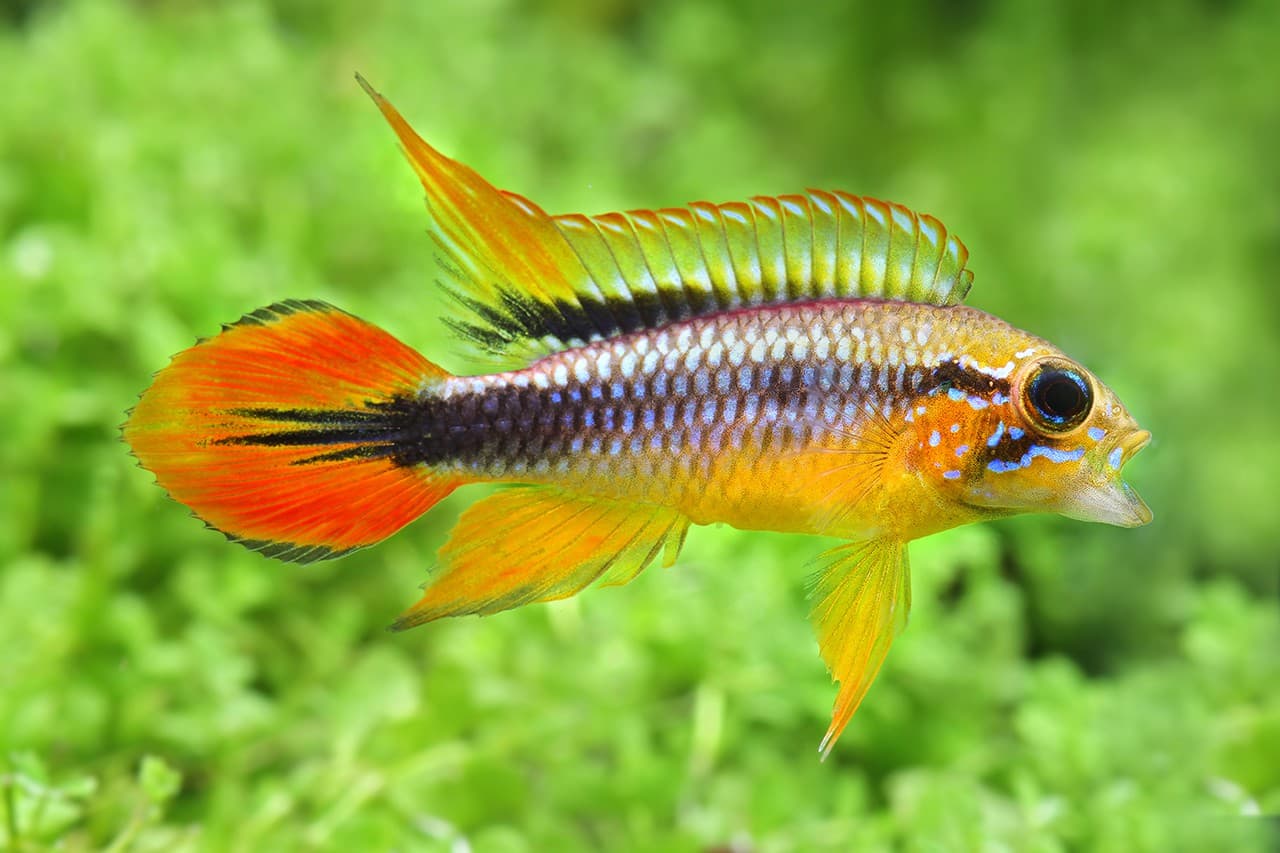
The Betta fish (Betta splendens), also known as the Siamese fighting fish, is one of the most recognizable and beloved aquarium fish in the world, and also one of the most misunderstood. Native to the warm, shallow rice paddies and slow-moving canals of Southeast Asia, bettas are labyrinth fish that can breathe atmospheric air and thrive in small, densely planted water bodies — but small does not mean they are suited to bowls. A properly kept betta is an interactive, long-lived pet with remarkable personality. This guide covers the water parameters, tank setup, and enrichment that let a betta live out its full, colorful potential.
1. Natural Habitat and Water Parameters
Wild bettas inhabit warm, still, heavily vegetated waters that are often oxygen-poor, which shaped their labyrinth organ and their tolerance for small territories.
- Temperature Range: Keep water between 25°C and 28°C (78°F to 82°F). Bettas are tropical fish and quickly become lethargic and disease-prone in cool water.
- pH and Hardness: They accept 6.0 to 8.0 pH and a wide hardness range, but stable, clean water matters more than an exact number.
- Water Quality: Bets are intolerant of ammonia and nitrate. Regular water changes and a cycled filter are essential even in small tanks.
2. Tank Setup and Aquascaping
A betta needs a secure, gently filtered tank that mimics a planted backwater.
- Minimum Tank Volume: Provide at least 20 liters (5 gallons) for a single betta; larger is easier to keep stable.
- Filtration and Flow: Use gentle filtration such as a baffled sponge filter, since strong current exhausts their heavy fins.
- Aquascaping: Dense plants, driftwood, and caves provide cover; bettas also rest on broad leaves and hammocks near the surface.
3. Heating and Temperature Stability
Unlike many beginner fish, bettas genuinely require a heater.
- Heater Requirement: Use a reliable submersible heater sized to the tank and stable room temperature.
- Thermometer: Always monitor temperature independently; heater dials drift over time.
- Cool Water Risk: Chronic cool temperatures suppress immunity and cause fin clamping.
4. Diet and Feeding Regimen
Bettas are carnivorous micropredators that need protein-rich food.
- Staple Foods: High-protein betta pellets or granules form the base of the diet.
- Live and Frozen Foods: Bloodworms, brine shrimp, and daphnia are relished and support color and condition.
- Portion Control: Feed only what the betta consumes in two minutes, once or twice daily, to prevent bloat and constipation.
5. Temperament and Tank Mates
Bettas are territorial and should generally be kept alone, though some peaceful combinations are possible.
- Solitary Best: A single betta in a well-planted tank is the safest and most stress-free arrangement.
- Possible Tank Mates: Peaceful bottom dwellers such as small Corydoras or snails in a larger tank.
- Avoid: Other bettas, fin-nippers, and any fish that competes for the same territory.
6. Common Health Issues and Prevention
Bettas are prone to a handful of largely preventable problems.
- Fin Rot: Often follows poor water quality; maintain clean water and treat early.
- Fin Biting: Stress or boredom causes bettas to bite their own fins; enrichment reduces it.
- Swim Bladder and Constipation: Overfeeding is the usual cause; fast the fish and feed a varied diet.
7. Enrichment and Long-Term Care
A stimulated betta is a healthy betta, and enrichment is easy to provide.
- Interaction: Bettas recognize their keepers and respond to attention and feeding routines.
- Environmental Variety: Rotate decor and add plants to keep the environment interesting.
- Lifespan: With proper care, bettas live three to five years and remain engaged throughout.