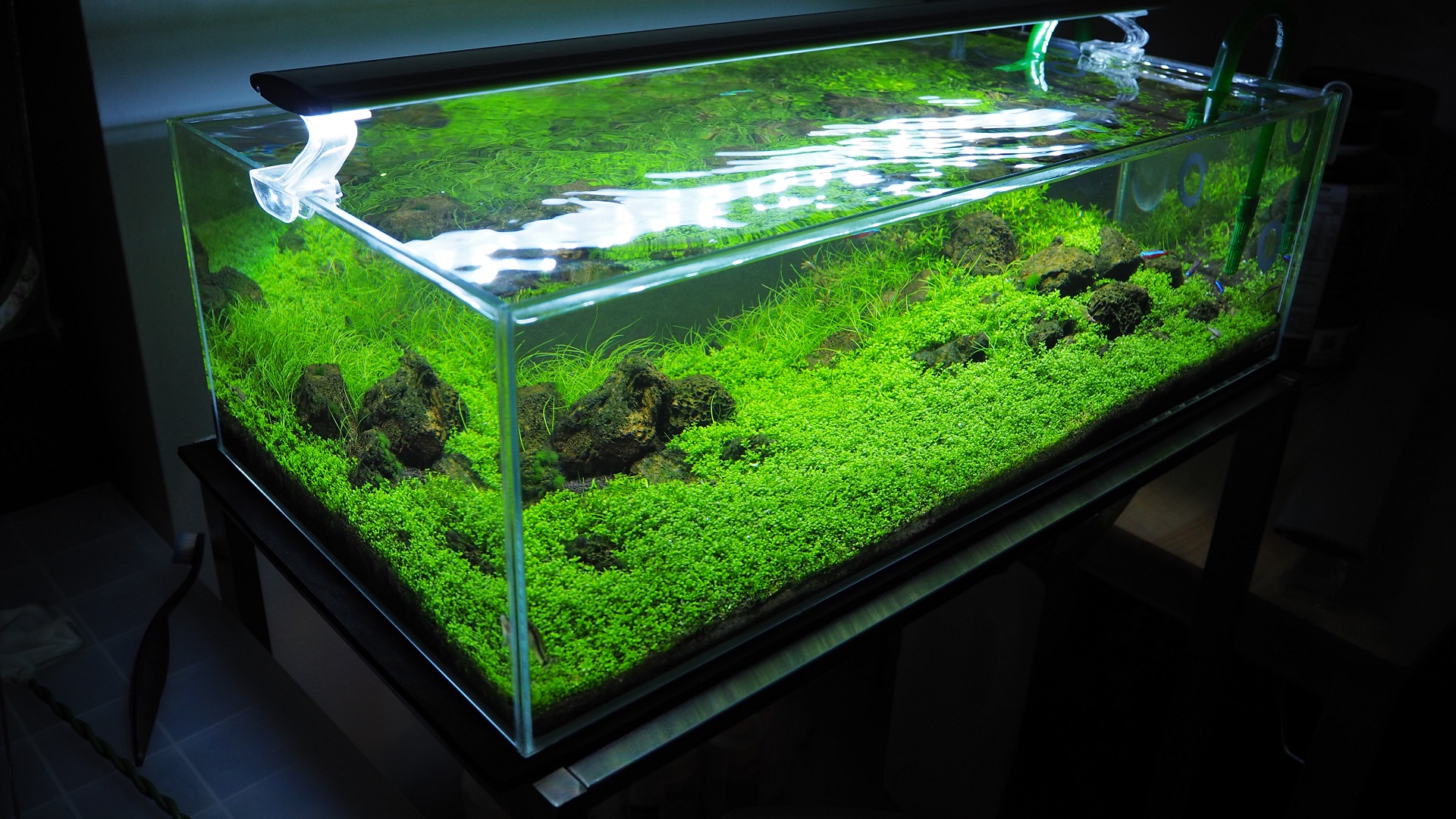
Vallisneria and other ribbon-leaved grass plants are the natural landscape builders of the planted aquarium, their long, flowing leaves swaying in the current to create height, movement, and a sense of depth behind smaller foreground species. These plants are among the easiest to grow, tolerating low light and feeding primarily from the substrate, yet they also have specific needs — particularly regarding CO2 and nutrient balance — that determine whether they thrive or dissolve. This guide explains how to plant, propagate, and use Vallisneria and similar species to build the lush background walls that give natural aquascapes their character.
1. What Are Grass and Ribbon Plants
These plants are defined by their long, narrow leaves and their growth habit.
- Ribbon Leaves: Long, strap-like leaves that sway with water movement.
- Runner Growth: They spread via underground runners, forming dense stands.
- Background Role: Their height makes them ideal for hiding equipment and framing a layout.
2. Common Vallisneria Species
Several species offer different sizes and tolerances.
- Vallisneria spiralis: A reliable, tall species for larger tanks.
- Vallisneria americana: Larger and broader, suited to big aquariums.
- Vallisneria nana: A compact species for smaller tanks and nano setups.
3. Planting and Rooting
Correct planting ensures these plants establish firmly.
- Individual Placement: Plant each crown separately rather than in a tight bundle.
- Root Coverage: Cover the roots and crown base without burying the growing point.
- Root Nutrition: Provide a nutrient-rich substrate for their heavy root-feeding habit.
4. Runner Propagation
Vallisneria spreads naturally via runners and is easy to propagate.
- Natural Spread: Runners emerge and produce new plantlets over time.
- Encouraging Spread: A nutrient-rich substrate and stable conditions accelerate runner production.
- Transplanting Plantlets: Separate plantlets once they are large enough to move.
5. Light, CO2, and Nutrients
While undemanding, Vallisneria has specific needs that prevent common problems.
- Low to Moderate Light: They grow well in moderate light without intense fixtures.
- CO2 Sensitivity: Some Vallisneria are sensitive to CO2 fluctuations and may melt.
- Nutrient Balance: Root nutrition is important; liquid dosing supports overall health.
6. Design Uses
Grass plants are versatile tools for building convincing landscapes.
- Background Walls: Dense stands hide equipment and frame the layout.
- Flow and Movement: Their swaying leaves add motion to a static aquascape.
- Natural Transition: Use them to transition between hardscape and open water.
7. Troubleshooting Grass Plants
Common problems are usually related to CO2, nutrients, or flow.
- Melting: Often caused by CO2 swings or transplant shock.
- Yellowing: Indicates nutrient deficiency, especially in the root zone.
- Dislodging: Insufficient root depth lets current pull plants free.