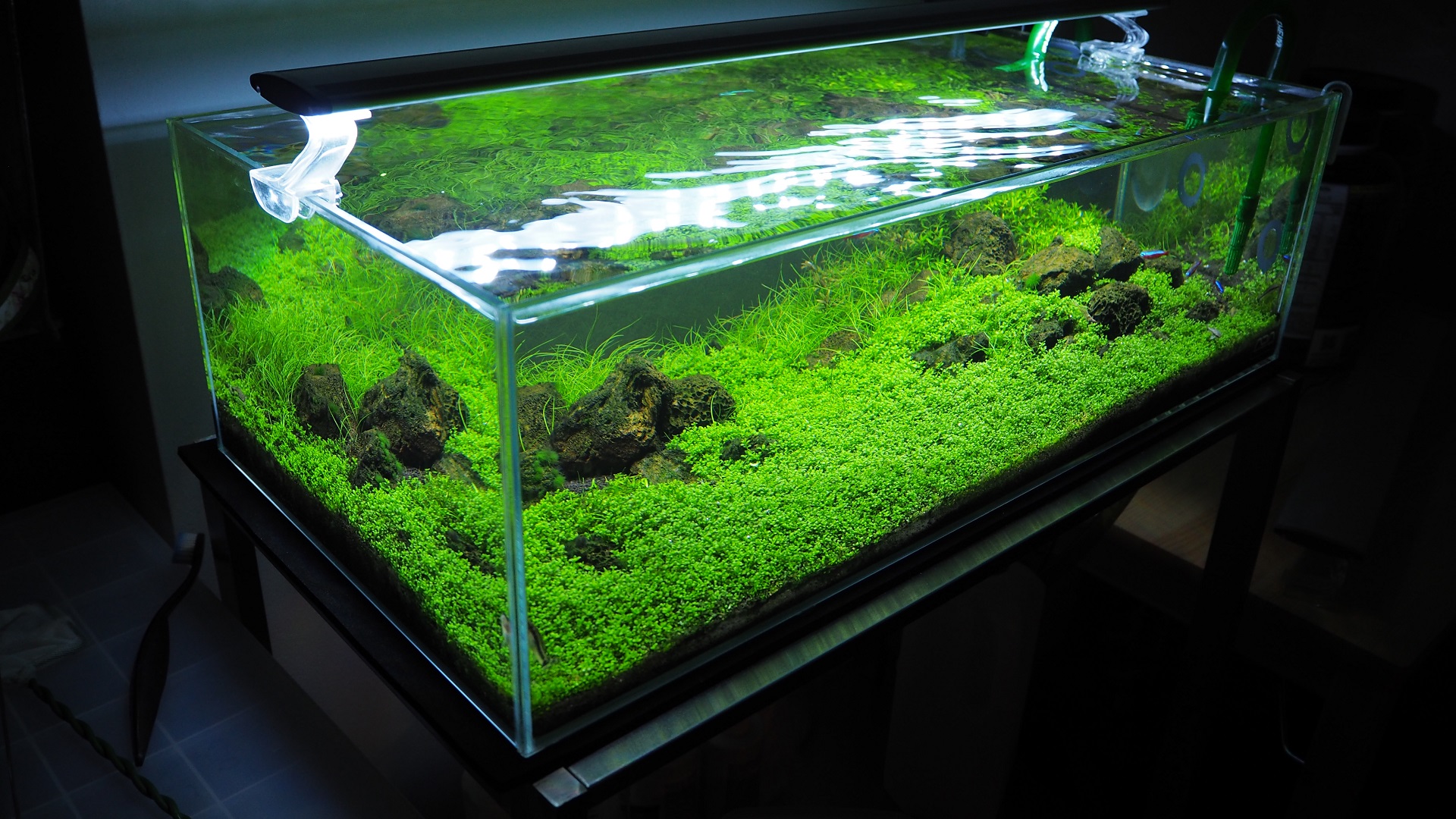
Establishing a dense, flawless foreground carpet of delicate plants like *Hemianthus callitrichoides* (Cuba) or Dwarf Hairgrass directly in a freshly filled aquarium is notoriously difficult because buoyant uprooting and melting algae outbreaks frequently ruin new layouts. To bypass these hurdles, professional aquascapers frequently utilize the Dry-Start Method (DSM). In this comprehensive agronomy guide, we explore the physiological principles and step-by-step execution of the dry-start technique.
AQUARIUM PLANTS · GUIDE 44
Mastering Carpet Aquarium Plants: Dry-Start Method, High Humidity, and Root Anchoring
An expert agronomy guide for planted freshwater tanks, detailing the dry-start method for establishing carpeting plants (HC Cuba, Hairgrass) prior to flooding.
Reference source →
Related guides
Aquarium Plants
Mastering Live Aquarium Plants: Substrate Root Tabs, CO2 Injection, and Nutrient Uptake

Aquarium Plants
Mastering Stem Aquarium Plants: Propagation, Trimming Techniques, and Bushy Growth Induction

Aquarium Plants