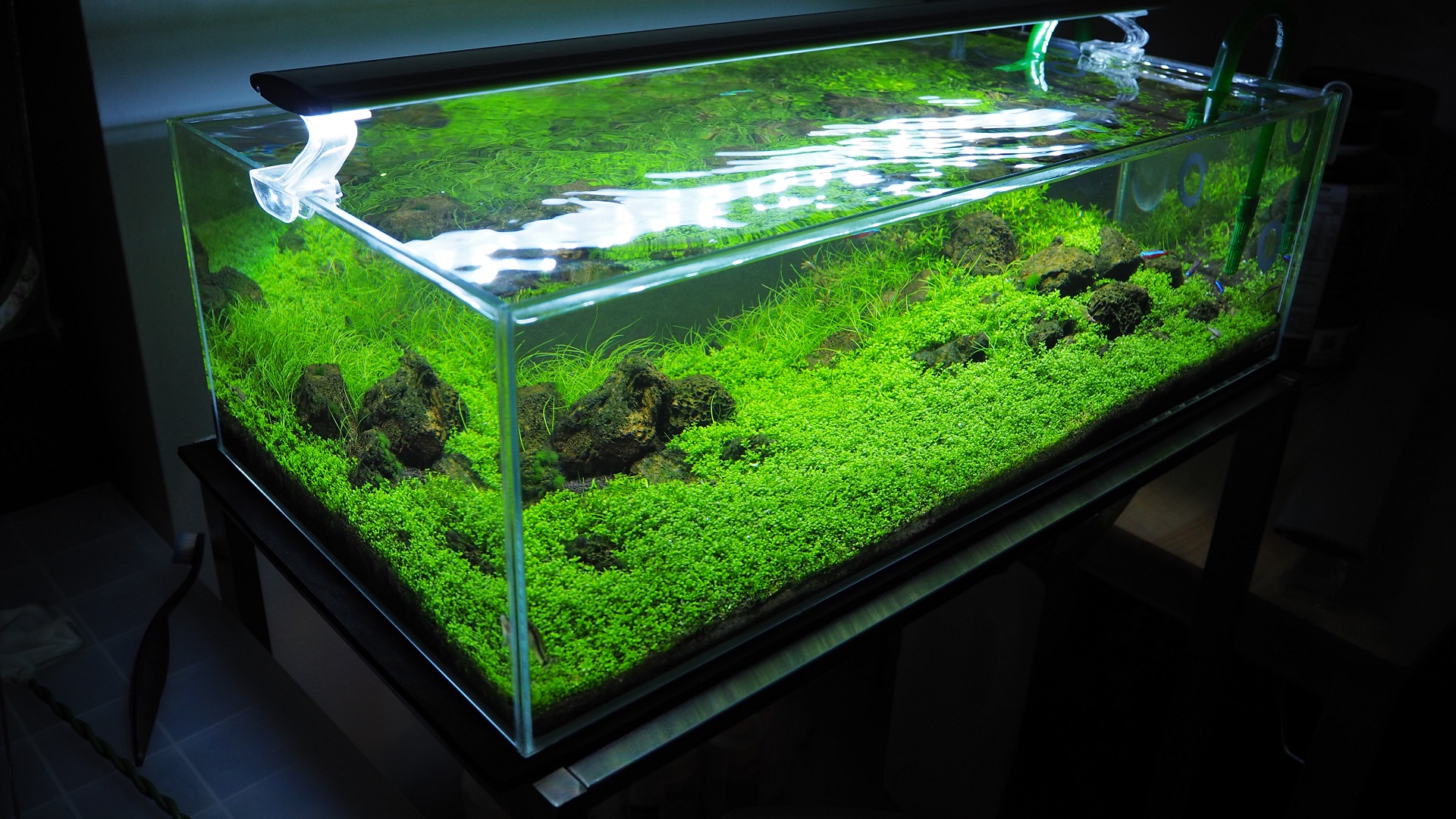
Floating-stem plants — species that grow tall in the background but spread subtly across the surface — blur the line between submerged and floating aquatics. Plants such as Hornwort, Cabomba, and some Ludwigia species can be kept rooted in the substrate or left to float, and their lax growth habits make them versatile tools for filling space, absorbing nutrients, and creating natural, unforced aquascapes. Their rapid growth and easy propagation make them ideal for beginners and for aquarists who want a lush background without exacting demands. This guide explains their trimming, propagation, and use in building dense background walls.
1. What Are Floating-Stem Plants
These species combine the stem-plant growth form with the option to float freely.
- Dual Habit: They can be planted in substrate or left to drift at the surface.
- Rapid Growth: Most grow quickly, absorbing nutrients from the water column.
- Versatility: They suit naturalistic, low-maintenance, and even temporary setups.
2. Common Species
Several popular species offer different textures and colors.
- Hornwort: A dense, needle-leaved plant that thrives floating or anchored.
- Cabomba: Fine, feathered foliage that adds softness to a layout.
- Ludwigia and Water Sprite: Attractive stems that adapt to either habit.
3. Trimming and Shaping
Floating-stem plants require regular trimming to stay attractive.
- Regular Pruning: Cut back long growth to prevent tangling and shading.
- Removing Debris: Dead lower leaves should be removed to maintain water quality.
- Shaping: Trim to create dense, sculpted masses rather than sprawling tangles.
4. Propagation
Propagation is simple and productive.
- Cutting Stems: Snip healthy stems below a node and replant or float the cutting.
- Rapid Multiplication: Each cutting becomes a new plant within weeks.
- Managing Excess: Share or compost surplus plants to avoid overcrowding.
5. Building Dense Background Walls
These plants excel at creating full, dark-green backgrounds that hide equipment.
- Layered Planting: Plant in staggered rows to build depth and volume.
- Repeated Trimming: Consistent trimming produces the dense, brush-like silhouette.
- Light Access: Provide adequate light to lower portions to avoid die-off.
6. Nutrient Uptake and Water Quality
Floating-stem plants are voracious nutrient consumers.
- Nitrate Export: Their rapid growth removes nitrate, improving water quality.
- Harvesting: Removing excess growth physically exports the absorbed nutrients.
- Competition: Very fast growers can outcompete slow plants for nutrients; manage density.
7. Troubleshooting
These forgiving plants still show problems when conditions slip.
- Browning: Often indicates insufficient light or nutrient deficiency.
- Fragmentation: Excessively fragile growth can indicate CO2 or nutrient imbalance.
- Shading: Unmanaged growth shades lower plants and must be thinned.